Debian GNU/FreeBSD: Exploring a Different Kernel
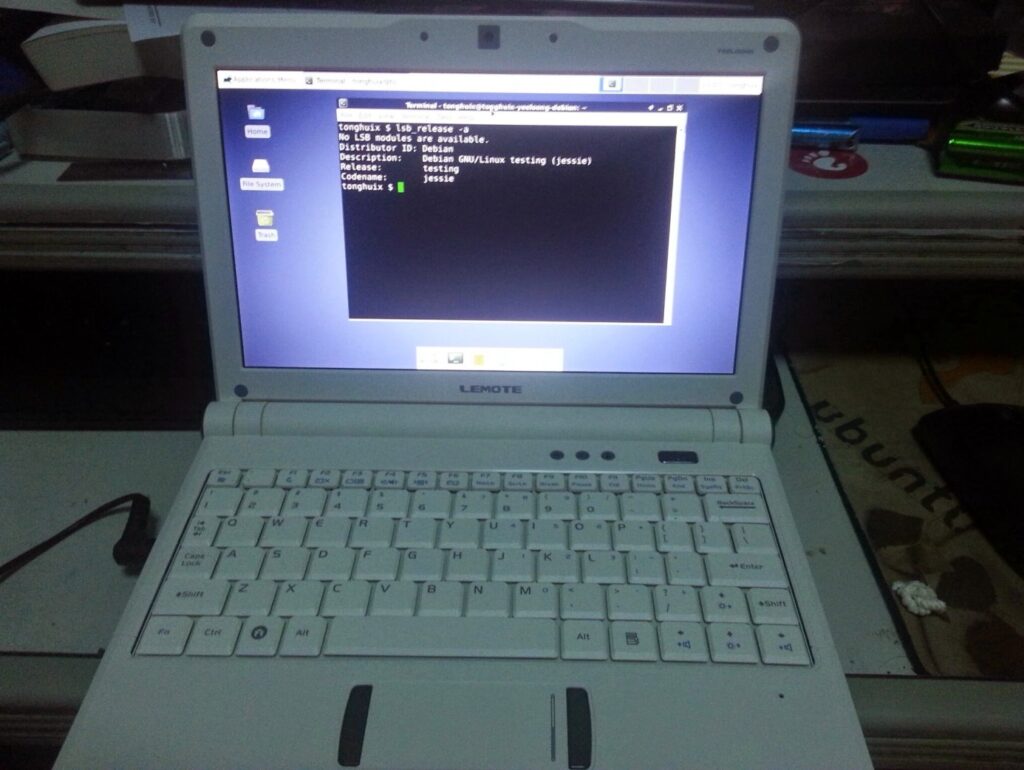
Debian beyond the Linux kernel
A June 2003 OSNews report described progress on Debian GNU/FreeBSD, pointing to Debian Planet’s coverage. The report emphasized the use of the GNU C library rather than FreeBSD’s own C library. This was not simply an attempt to run a Linux desktop theme on FreeBSD; it raised substantial questions about which parts of an operating system could be combined and maintained together.
Debian is often associated with the Linux kernel, but a distribution also consists of applications, libraries, package-management tools, policies, build systems, and the people who maintain them. A different kernel can change the interfaces available to software even if users recognize the surrounding command-line tools.
Portability is more than recompilation
Software that relies on standardized interfaces may require relatively little adaptation. Other applications may assume Linux-specific device names, system calls, process information, or networking facilities. Port maintainers have to identify these assumptions, address them where possible, and ensure that packages behave consistently after installation.
A C library helps applications communicate with the operating system. Providing a familiar library interface can reduce some porting work, but it cannot make incompatible kernel behavior disappear. Testing and coordination with upstream projects remain necessary. Package availability, integration and long-term maintenance are as important as the ability to boot a demonstration system.
What happened later
The Debian GNU/kFreeBSD wiki documents the later project, while the official Debian ports page distinguishes supported architectures and historical kernel ports. Readers evaluating an operating system for current use should consult maintained documentation rather than assuming the historical port is still supported. The experiment illustrates a broader architectural lesson: a distribution’s identity is not reducible to any single component.
Distinguishing a kernel port from a processor port
A processor port and a kernel port change different parts of the operating system. Debian’s AMD64 port addressed the execution of software on a particular instruction-set architecture. Debian GNU/FreeBSD explored the use of a different kernel underneath a familiar distribution environment. Both involve portability, but the sources of incompatibility and the tests required to resolve them differ.
A program compiled for another processor may still use the same operating system interfaces. A program running above another kernel may execute on the same processor while encountering different interfaces to devices, processes or networking. Libraries can provide a shared programming interface, but they must translate that interface into operations the underlying system can perform. Some facilities have no simple one-to-one translation.
For users, this means a recognizable shell or desktop is not proof that all software will behave exactly as it does on Linux. An application that stays within portable interfaces may be straightforward to adapt. Software that relies heavily on Linux-specific facilities may need substantial changes or an alternative implementation. Port maintainers must distinguish these cases and explain the limitations to users.
The practical role of the C library
The GNU C library is a central interface for many programs. Applications use library functions for such activities as working with files, handling memory and managing processes. In a port, the library must coordinate its expectations with the services that the kernel makes available. Implementing those interfaces correctly involves more than choosing a library with a familiar name.
Some behaviors can be expressed in terms of standardized interfaces, making it possible for software to target a broad set of operating systems. Others depend on details of a particular kernel. When a program’s build succeeds, that demonstrates that the compiler and linker could produce an executable. It does not establish that all runtime behavior is correct. Test cases that exercise networking, process control and file operations are important evidence of functional compatibility.
The 2003 report matters because it identified progress on this foundational layer. It should not be treated as evidence that all Debian packages had already been made available or that a complete, supported release existed at the time. Those are separate milestones.
Packaging for a different environment
A package carries more information than its application files. It can include dependency declarations, configuration scripts, file ownership information and assumptions about the services available on the system. Installation tools interpret this information to integrate software into the distribution. A port therefore has to examine package behavior as well as program behavior.
Consider a service whose setup expects a device path or an initialization mechanism specific to Linux. The executable might compile for a different kernel, yet installation or startup could still fail. The packaging scripts may need to detect the environment or use an alternative mechanism. Changes of that kind have implications for maintenance: they must remain compatible with future package versions and be reviewed when upstream software changes.
A large distribution has the additional challenge of dependencies. If one important library is unavailable or unreliable, many applications can be affected. Improving a foundational component can therefore open opportunities for multiple packages at once. Conversely, a regression in that layer can have wide consequences. This is why a port needs repeatable builds, tests and coordination instead of a collection of independent demonstrations.
How to evaluate the experiment
Different readers may have different reasons for examining an alternative kernel. A developer could be interested in finding hidden portability assumptions in software. An administrator might want to understand how a particular kernel interacts with familiar package-management tools. A researcher may simply wish to explore the boundaries between operating-system components.
These are legitimate reasons to study a historical port without implying that the port is currently maintained or appropriate for production. The relevant questions include the scope of packages that work, the availability of installation tools, the project’s support status and the quality of its documentation. A working experimental installation is evidence of progress, not a substitute for a maintenance commitment.
The meaning of a Debian system
The broader significance of the project is that a distribution includes policies, build processes, libraries, applications and community practices in addition to its kernel. Changing a central technical component tests the assumptions that connect those parts. It may uncover opportunities to make software more portable, even if the experiment does not become a lasting release architecture.
For a historical account, it is important not to conflate FreeBSD itself with Debian’s effort to build a GNU-oriented distribution using the FreeBSD kernel. The two projects make different choices about the relationship between the base system and applications. Respecting those differences gives the 2003 report its proper context and explains why a seemingly small change in the C library was worth reporting. The later project documentation should be read as a subsequent stage of development, not as a description of everything already available in June 2003.
How portability affects documentation
A manual written for GNU/Linux may accurately describe general shell commands while giving unsuitable instructions for managing devices on an alternative kernel. The package manager can remain familiar even when system administration requires different knowledge. Documentation for a port should therefore identify which instructions are shared and which are platform-specific. This is also a useful distinction when reading historical discussions: the ability to install familiar GNU tools is one claim, while compatibility with every Linux administration procedure is another. Readers should consult documentation for the exact operating environment rather than assuming that a common command-line interface eliminates the differences.