Installing OpenAFS on Debian: Historical Context
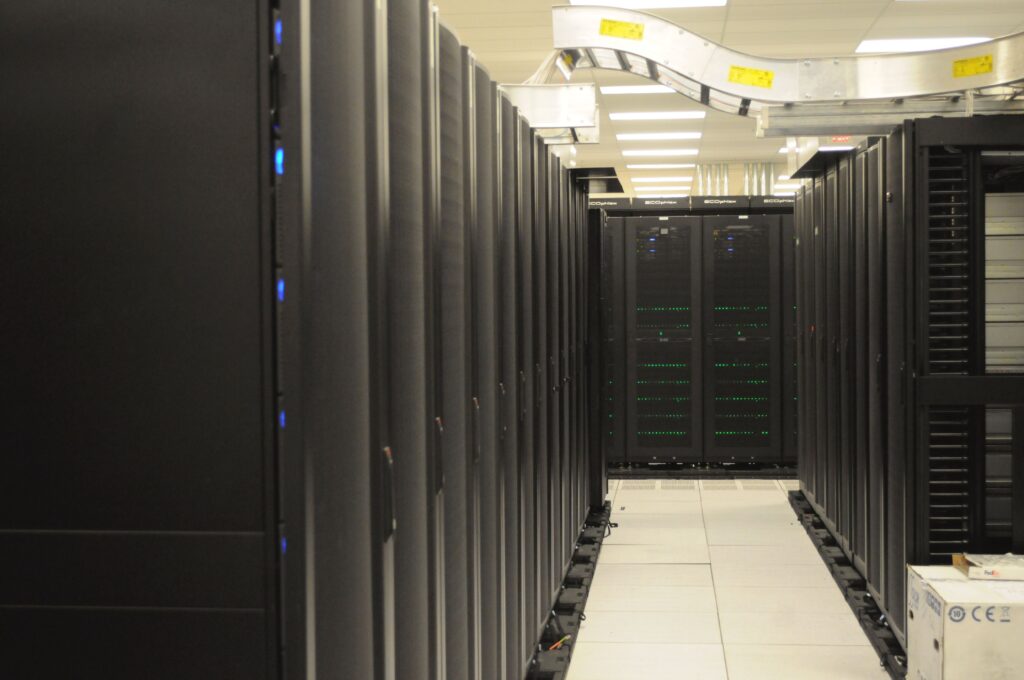
A surviving installation guide
In July 2008, Dietrich Schroff republished a historical OpenAFS tutorial and explicitly referred to Debian Planet’s ID 816. This is unusually valuable evidence: readers can consult the historical technical text through its published source rather than rely on a guess about the old article. The text and commands are not copied here, and permission for full republication has not been established.
How distributed storage is organized
OpenAFS separates the location of stored data from the path that users see. Its servers are organized into administrative domains called cells, and storage is managed in volumes. A client can use a consistent namespace even when administrators move a volume between servers. The OpenAFS administration guide provides technical context for this organization.
Authentication and authorization are distinct considerations. A user must establish an identity, and the storage service must determine which resources that identity may access. Distributed storage administration therefore requires attention to account management, service configuration, access permissions and recovery as well as disk capacity.
Why the old commands need context
The historical guide contains configuration choices associated with the software of its time, including obsolete cryptography and temporary unauthenticated setup. These are not recommendations for contemporary systems. Readers implementing OpenAFS should consult maintained documentation for their release, such as the OpenAFS administration resources, rather than apply old commands directly.
The continuing value of the original guide is as a record of the challenges involved in integrating distributed file systems into Linux environments. A new deployment requires its own version-specific security review.
Storage volumes and the user-visible namespace
One reason a distributed filesystem can be useful is that the user-visible organization of data need not mirror the physical organization of disks. In a small installation, a single server may supply many files. As demand grows, administrators may need to move part of the stored data to another machine. If clients depend on a path that explicitly identifies the physical server, moving data can become an application problem as well as a storage problem.
OpenAFS uses a namespace and volume model that can separate the location of storage from the paths users access. Its administration documentation describes the underlying concepts of cells, volumes and server responsibilities; check the documentation version against the software in use. The concept explains why a Debian installation guide would need to address more than creating a directory and installing a single package.
Authentication is not the entire security model
An installation of shared storage has at least two distinct security questions: how a client or user establishes an identity, and what that identity is authorized to do. A successful authentication should not automatically permit access to all stored material. Permissions need to reflect the intended use of the system, particularly if it serves several groups with different responsibilities.
In a distributed environment, administrators also need to consider the infrastructure that makes access possible. Time synchronization, service availability, name resolution, and the health of authentication services can affect the user’s ability to reach data. A problem in one of those components may look like a storage failure from the perspective of an application. Debian infrastructure security provides a related historical example of why the operation of shared services deserves attention in its own right.
What the existence of the original guide establishes
The republished tutorial is a valuable historical source because the author identifies it as earlier work associated with Debian Planet. That is stronger evidence than a reference whose title and destination survive but whose text does not. It also allows readers to consult the author’s published copy directly. The existence of that copy does not by itself establish permission for a different publisher to reproduce the entire text.
A modern account can explain the underlying concepts, identify the guide’s historical context and direct interested readers to the author’s page without copying its wording or commands. This distinction is important for technical material because a reproduction might appear to offer instructions that are still supported. A historical configuration should instead be understood in relation to the version of the software and operating system for which it was prepared.
Operational questions before a new deployment
A new distributed storage installation begins with requirements rather than with an old list of package names. Determine which clients need access, how identities will be managed, how data will be recovered, and what interruptions the users can tolerate. Document the ownership of the administrative tasks and the way that changes will be tested. Those questions influence the design even when an installation can be automated.
A backup plan should also distinguish between the files themselves and the configuration necessary to provide access to them. Restoring data without the associated permissions, service information or authentication infrastructure may not return the system to its intended state. Recovery tests need to reflect that broader requirement.
The historical OpenAFS tutorial is worth reading as a record of Linux systems administration in its period. It is not a substitute for a design review based on supported software. That distinction preserves the useful historical evidence while avoiding reliance on authentication and installation practices that may no longer be appropriate.
Why caching and replication deserve separate consideration
Shared storage is often accessed by users on different computers, and repeated access to the same material can create unnecessary network activity. Caching is one way to reduce that activity. Replication addresses a different concern: making copies of data available through more than one server under suitable conditions. The OpenAFS administration guide discusses both concepts. They should not be treated as interchangeable, and neither is a substitute for a backup that can recover earlier data after an accidental deletion or other loss.
Consider a department that distributes a common set of software or reference documents to a number of workstations. Much of the content may change infrequently. A design that accounts for repeated reads can reduce the need for every client to request the same information continuously. The administrator still needs to understand how changes become visible to clients and which data can be replicated. A workload consisting of frequently modified user files may raise different questions from the distribution of relatively static material.
The choice of storage technology also affects the way failures are investigated. A file-access error might reflect a client-side problem, a permissions decision, a network interruption or the condition of a server. A useful monitoring and troubleshooting approach distinguishes among these possibilities. It should not immediately attribute every access error to the disk that contains the requested file.
Distinguishing historical documentation from a maintained deployment procedure
A published installation guide can be accurate for the combination of software available when it was written and still require substantial revision for another environment. Package names may change, services may be configured differently, and authentication requirements may evolve. Even a recent-looking web page may reproduce instructions from a much earlier version.
The author’s surviving 2008 post establishes the provenance of the older material: it describes recovering a copy of the article originally submitted in November 2002. Readers can consult that source to understand the work required at the time. For a new installation, the documentation must be matched to the actual versions of the client, server and authentication software. The OpenAFS project provides a starting point for finding the relevant maintained resources. A historical article can explain the architecture and the problems administrators faced without pretending that it has tested a contemporary deployment.